

As machining, metalworking, and automotive component manufacturing continue to demand higher levels of precision and productivity, effective filtration of cutting fluids, coolants, and other process liquids has become increasingly important. Filter paper rolls are widely used as consumable media in automatic filtration systems, where they capture solid contaminants and help maintain the condition of circulating industrial fluids.
Contaminant capture is one of the primary functions of filter paper rolls. During machining and other industrial processes, liquids can become contaminated with metal chips, abrasive particles, and suspended solids of different sizes. As the fluid passes through the filter media, its fibrous structure retains a portion of these particles on or within the paper, reducing the amount of solid contamination carried by the filtered fluid.
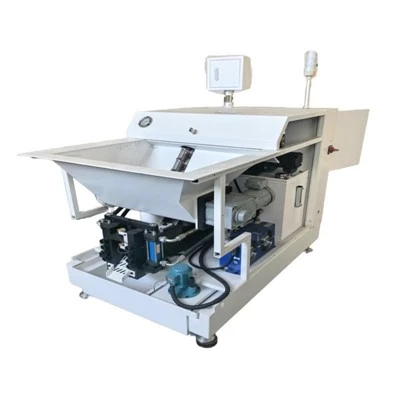
Another important function is continuous filtration. Conventional filter media may require manual removal and replacement once they become saturated with contaminants. Roll-type filter media can instead advance progressively through the filtration system. When the active section becomes heavily loaded, a fresh section of paper moves into position, allowing filtration to continue with less manual intervention. This operating principle is particularly suitable for automated and continuous production environments.
Filter paper rolls also help maintain fluid cleanliness. Cutting fluids and coolants can gradually accumulate metal particles and abrasive debris during circulation. Continuous filtration removes a portion of these solids and helps maintain more consistent fluid conditions, providing a cleaner process medium for subsequent manufacturing operations.
Another useful function is supporting downstream equipment protection. Once solid particles have been captured by the filter media, fewer contaminants remain in the circulating fluid. This can reduce the amount of debris reaching pumps, pipelines, valves, and other fluid-handling components, helping limit contamination-related wear and maintenance requirements.
Filter paper rolls also offer convenient replacement and flexible specifications. Different paper materials, widths, lengths, and filtration grades can be selected according to the filtration equipment, fluid characteristics, contaminant type, and required filtration performance. Proper media selection can improve compatibility between the filter paper and the filtration system.
Overall, filter paper rolls combine contaminant capture, continuous filtration, fluid cleanliness support, and protection of downstream equipment. As automated filtration systems become more common in industrial production, appropriately selected filter paper rolls can continue to provide reliable support for process-fluid circulation and solid contaminant removal.