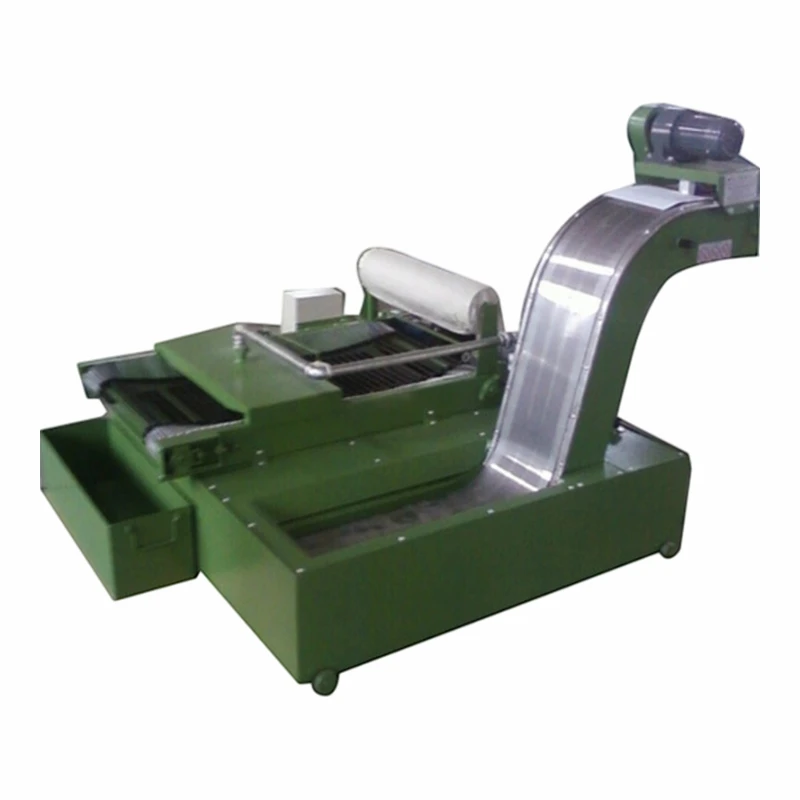
As machining, automotive component manufacturing, CNC production, and metalworking continue to move toward greater automation and process efficiency, the management of metal chips has become an increasingly important part of modern manufacturing. Chip handling involves much more than simply removing waste from the shop floor. It can include collection, conveying, separation, shredding, filtration, compaction, and material recovery. A well-designed chip management system can support cleaner production areas and more continuous machining operations.
Continuous material handling is a defining feature of modern chip management. CNC machines and automated production lines often operate for extended periods, generating metal chips continuously throughout the machining process. Conveyors and chip removal systems can transfer chips away from the machine area as they are produced, reducing accumulation around the equipment and helping maintain a more organized working environment.
Material classification is another important characteristic. Chips generated by different machining operations can vary considerably in shape, size, and material composition. Turning operations may produce long, string-like chips, while milling and drilling can generate shorter chips, fragments, or particles. The handling system should therefore be selected according to the physical characteristics of the chips to ensure efficient conveying and downstream processing.
Modern chip handling systems also feature a high degree of automation. Chip conveyors can be integrated with shredders, magnetic separators, centrifuges, compactors, and other processing equipment to create a coordinated workflow from chip generation to final collection. Automation reduces the need for manual cleanup and helps prevent production interruptions caused by excessive chip accumulation.
Solid-liquid separation is particularly relevant when chips carry cutting fluid or coolant. After machining, metal chips may retain a certain amount of process fluid. Centrifugal separation, filtration, and other treatment methods can remove part of the liquid from the solid material, making the chips easier to handle, store, and process further.
Another characteristic is volume reduction and material recovery. Loose metal chips can occupy considerable storage space. After shredding, dewatering, and compaction, the material can be converted into a denser form that is easier to store and transport. Properly separated metal chips can also enter subsequent recycling processes, helping recover valuable materials from machining waste.
Overall, modern metal chip handling is characterized by continuous conveying, material classification, automated processing, solid-liquid separation, volume reduction, and resource recovery. By developing a handling process that matches the machining method and chip characteristics, manufacturers can improve shop-floor management and establish a more efficient approach to the treatment and recycling of metalworking waste.